The Split Incentive: Climate's Hardest Building Problem
One in three homes in Washington is a rental. The landlord buys the furnace and the tenant pays the bill, and that single mismatch quietly stalls a third of our housing.
One in three homes in Washington is a rental, and rentals sit right on top of one of the most stubborn problems in all of climate work.
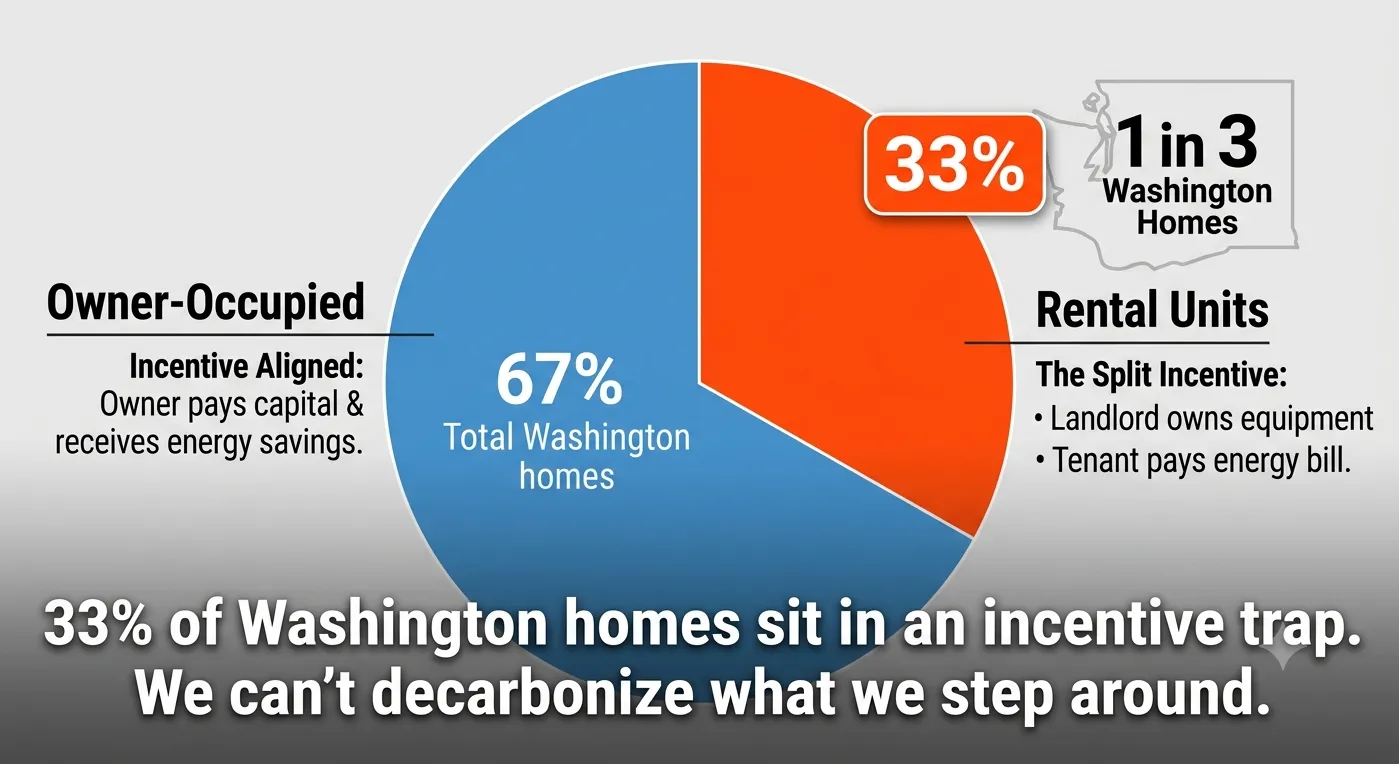
It's called the split incentive, and the mechanics are simple: the landlord buys the furnace, and the tenant pays the energy bill. So the person who could make the building efficient isn't the one paying to run it, and the person paying to run it can't touch the equipment. Nobody's incentive lines up with the upgrade, and so the upgrade doesn't happen.
That's why "just electrify" quietly stalls across a third of our housing. It isn't that people don't care. It's that the structure works against them.
In the larger multifamily buildings we work with at Pilotlight, this same tension shows up constantly, and untangling it is a real part of what makes compliance and upgrades hard. SCALE 2030 doesn't wave it away either. It names the rental challenge directly, and its tools help: labeling so renters can finally see costs, and financing designed so the burden doesn't fall on one party.
You can't decarbonize the housing you keep stepping around, and it's encouraging that the roadmap treats renters and small landlords as central rather than too hard to solve.